

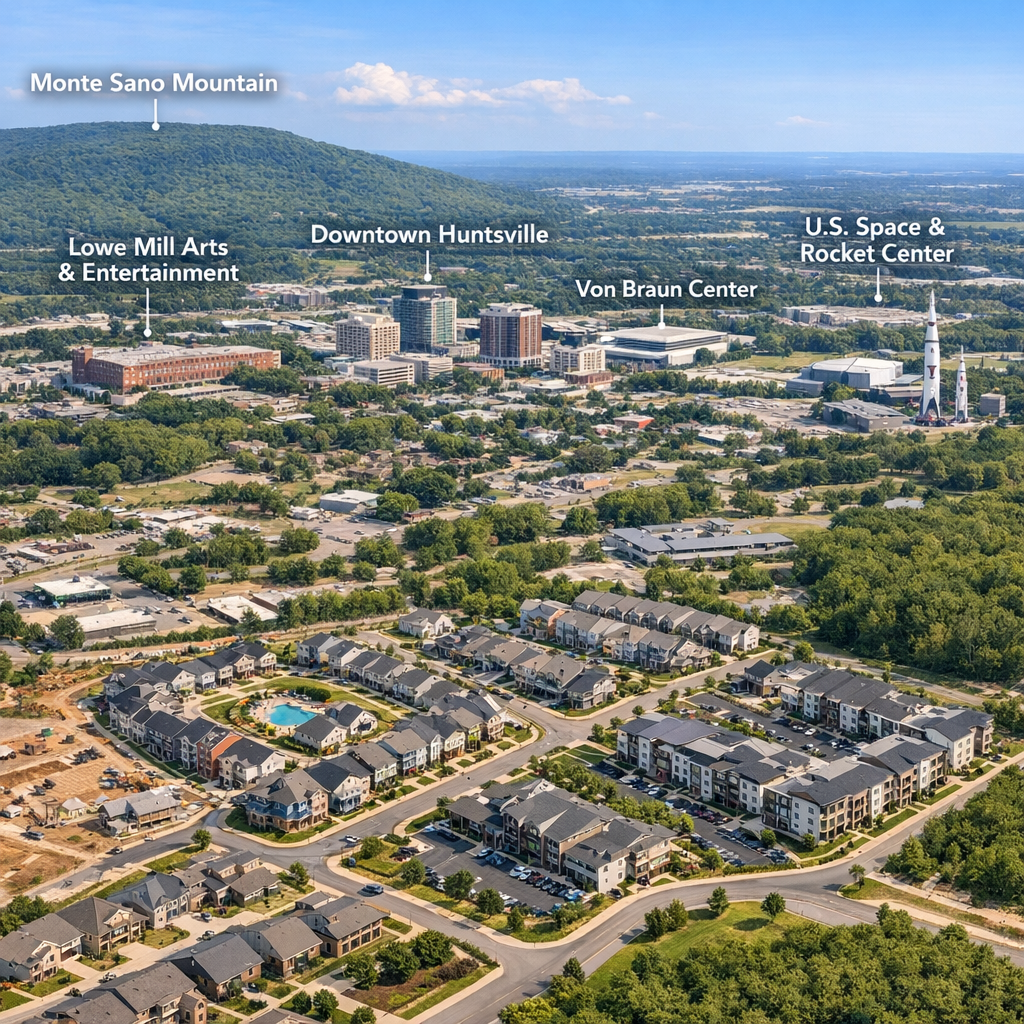
Huntsville, Alabama, continues to experience dynamic changes in its real estate market, influenced by steady growth and significant local developments. Understanding these trends is essential for prospective homebuyers, renters, and investors.
Current Market Trends
As of mid-2026, the median home price in Huntsville is approximately $325,000 to $350,000, reflecting a modest year-over-year increase. This gradual appreciation indicates a stabilizing market, moving away from the rapid price surges of previous years. Homes are now spending an average of 38 to 54 days on the market, a slight increase from the 2022 low of around 18 days, suggesting a more balanced environment between buyers and sellers.
Rental Market Insights
The rental sector in Huntsville remains competitive. The average rent is $1,322, which is below the national average of $1,965. This affordability continues to attract a diverse population seeking quality housing options.
Local Developments Shaping the Market
Several key developments are contributing to Huntsville’s evolving real estate landscape:
- MidCity Expansion: A $300 million, 12-acre expansion known as the MidCity Arts + Innovation Subdistrict is underway. This project includes a 3,000-seat indoor music venue, two new hotels, an Innovation Tech Campus, and 60,000 square feet of retail and entertainment spaces. The expansion aims to transform the area into an ’18-hour district,’ enhancing its appeal to residents and visitors alike.
- Lewter District Redevelopment: The historic Lewter Hardware building is at the heart of a $50 million redevelopment project. The Lewter District will feature a new five-story Class A office building and 14 luxury townhomes, blending Huntsville’s rich history with modern living spaces.
- John Hunt Park Recreation Center: This newly opened facility boasts 25 lighted and covered outdoor pickleball courts, including a championship court with bleacher seating. Located on 8.5 acres of the expansive 435-acre park, the center aims to become a regional hub for pickleball, attracting tournaments and providing a popular venue for local residents.
These developments not only enhance Huntsville’s cultural and recreational offerings but also contribute to the city’s economic growth, potentially influencing property values and attracting new residents.
Conclusion
Huntsville’s real estate market is characterized by steady growth, a competitive rental environment, and transformative local developments. Staying informed about these trends is crucial for making well-informed decisions in this dynamic market.