

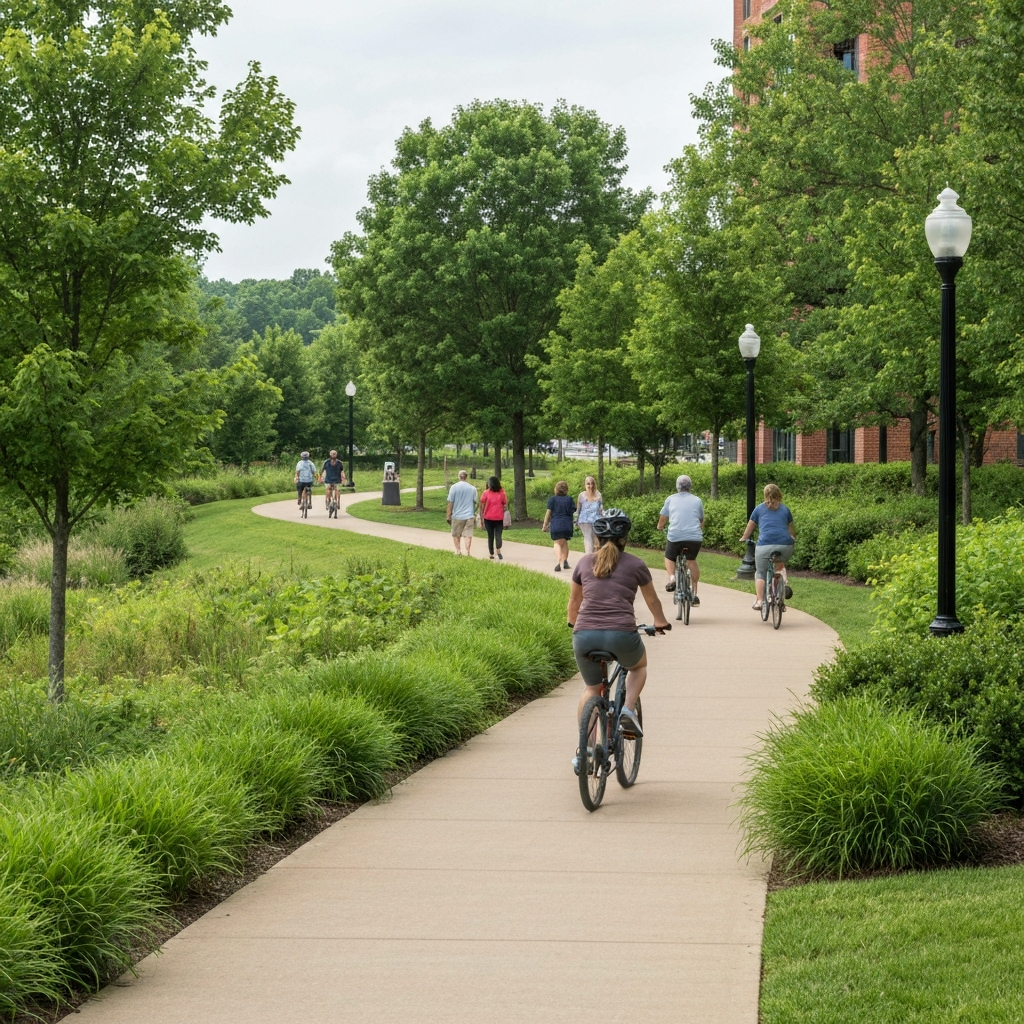
Huntsville is making significant strides in expanding its greenway network, recognizing these pedestrian trails as vital infrastructure that enhances quality of life and attracts new residents and businesses. Currently, the city boasts nearly 50 miles of greenways, with plans to add an additional 220 miles in the future.
Strategic Development of Greenways
The city’s approach to greenway development is strategic and multifaceted. Dennis Madsen, Huntsville’s director of urban and long-range planning, emphasizes that greenways serve multiple purposes beyond recreation. They offer potential for bike commuting and can spur greenway-centric housing or commercial developments, similar to Atlanta’s BeltLine or South Carolina’s Swamp Rabbit Trail.
Recent projects include the Meek Greenway in North Huntsville and a connector greenway in South Huntsville, which will complete a roughly 13-mile loop. In areas like Haysland Road, greenways have become central to new parks, mixed-use developments, and expanding residential options, all connected to the city’s larger network.
Balancing Growth and Community Concerns
While the expansion of greenways brings numerous benefits, it also presents challenges. Rapid growth can lead to concerns about overdevelopment. Huntsville has experienced swift growth in the past, notably alongside Redstone Arsenal in the 1950s, when the city’s population quadrupled from around 16,000 to 72,000 residents in less than a decade. City planners are mindful of these dynamics and are working to balance development with community needs.
Looking Ahead
As Huntsville continues to invest in its greenway infrastructure, the city aims to create a more connected and vibrant community. These efforts are expected to enhance the quality of life for current residents and make Huntsville an attractive destination for future growth and investment.